Welcome to the first blog post on Habesha Law! In this post, we’ll explore a core value that lies at the heart of all human rights: human dignity.
What Is Human Dignity?
Human dignity means that every person has inherent worth simply because they are human. This worth does not depend on race, gender, status, religion, or any other condition. It is a principle that serves as the moral foundation for all human rights laws.
Dignity in the Universal Declaration of Human Rights (UDHR)
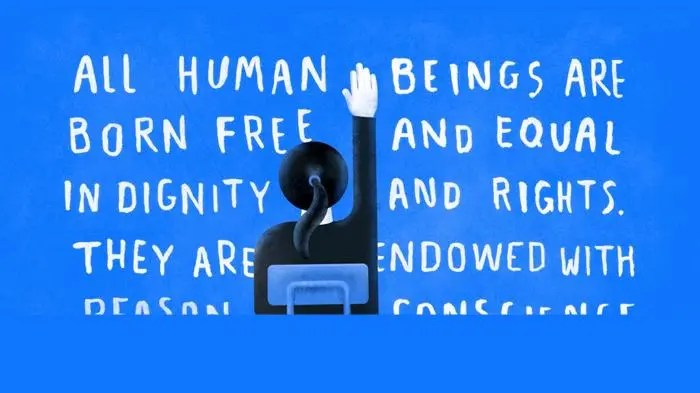
The Universal Declaration of Human Rights (UDHR), adopted by the United Nations General Assembly in 1948, starts with dignity. Article 1 declares:
“All human beings are born free and equal in dignity and rights. They are endowed with reason and conscience and should act towards one another in a spirit of brotherhood” (United Nations, 1948, Article 1).
This shows that dignity is not just a legal term—it’s a universal value meant to guide how we treat one another in society.
Dignity in the International Covenant on Civil and Political Rights (ICCPR)
The International Covenant on Civil and Political Rights (ICCPR), adopted in 1966, builds on the UDHR and gives legal force to its principles. The Preamble of the ICCPR affirms:
“Recognizing that these rights derive from the inherent dignity of the human person…” (United Nations, 1966).
This means that civil and political rights—such as the right to life, freedom of expression, and protection from torture—are not privileges granted by governments, but rights that exist because every human has dignity.
Why It Matters
Understanding human dignity helps us see why rights matter—not just in courts, but in daily life. When we respect someone’s dignity, we stand against injustice, discrimination, and abuse. And when the law reflects dignity, it protects our shared humanity.
At Habesha Law, we believe that legal knowledge should start with values. Dignity is not just the beginning of the UDHR—it should be the beginning of every conversation about justice.
Author: Abraham Sahilu

 Habesha Law