Lawyer | Lecturer | Founder of Habesha Law |
Criminal Justice graduate student at UM–Dearborn, with experience in legal practice and academia. Passionate about justice, education, and community empowerment.
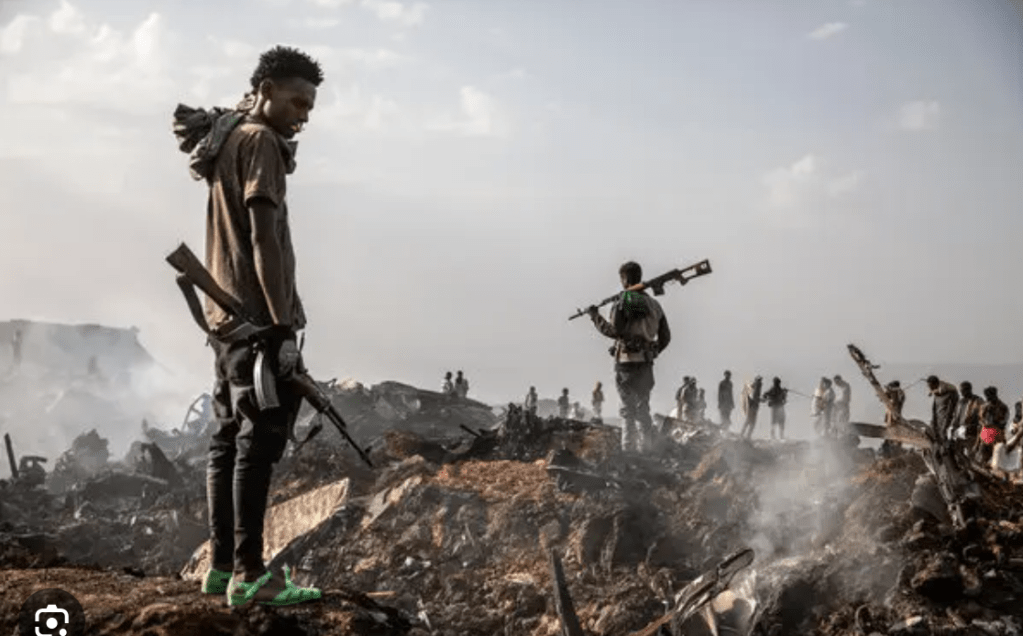
Ethiopia in 2025 stands at a precarious political and humanitarian juncture. Although the November 2022 Cessation of Hostilities Agreement formally ended the large-scale war in Tigray, subsequent developments demonstrate that the country has not transitioned into stable peace. Instead, overlapping regional conflicts, institutional fragmentation, and heightened geopolitical tensions continue to undermine national stability and exacerbate human-rights vulnerabilities.
Independent monitors note that violence persists across multiple regions. The Global Centre for the Responsibility to Protect (GCR2P) reports that populations in Ethiopia remain at risk of atrocity crimes, as fighting continues in Amhara, Tigray, and Oromia, and accountability mechanisms remain absent. Human Rights Watch’s 2025 World Report similarly documents serious abuses by federal forces and aligned militias in Amhara, including extrajudicial killings, drone strikes affecting civilians, and attacks on medical personnel, reflecting a broader pattern of impunity. The continued absence of credible investigations into wartime atrocities in Tigray, combined with the expiration of the UN International Commission of Human Rights Experts on Ethiopia (ICHREE), has further limited avenues for justice.
Meanwhile, the slowing of political reforms has weakened Ethiopia’s institutional capacity to manage these crises. Although early initiatives after 2018 expanded political space, recent assessments indicate persistent security-force abuses, constraints on civil liberties, and inconsistent adherence to the rule of law. The erosion of public trust in state institutions undermines prospects for democratic consolidation and heightens the potential for political grievances to manifest as violence.
In sum, Ethiopia’s political landscape in 2025 is shaped by internal fragmentation, unresolved regional conflicts, and escalating geopolitical tensions. These dynamics collectively endanger the human rights of Ethiopian civilians and impede pathways toward sustainable peace. Durable stability will require renewed commitment to inclusive political dialogue, credible accountability mechanisms, and strengthened protections for civil and political rights.
References
Global Centre for the Responsibility to Protect (GCR2P). Ethiopia – Country Report on Atrocity Risk (2025).
Human Rights Watch. World Report 2025: Ethiopia.
U.S. Congressional Research Service. Ethiopia: Conflict, Governance, and Human Rights (2024–2025).
Ethnic federalism in Ethiopia faces significant challenges, particularly regarding national fragmentation and the consistent implementation of human rights standards. While the system was designed to accommodate ethnic diversity, it has raised concerns about the country’s unity and stability. The FDRE Constitution explicitly grants the right to self-determination, including secession, which brings the risks of fragmentation and disintegration into practical consideration (Article 39, FDRE Constitution, 1995). Given these risks, many question the long-term viability of ethnic federalism in sustaining a unified federal system. If the right to secession leads to disunity, then the very mechanism intended to resolve ethnic tensions becomes a source of instability rather than a solution.
During the 2007 election campaign, various political parties debated the merits and drawbacks of ethnic federalism. Opposition party leaders argued that the ethnic-based federal system had failed to deliver on promises of development, democracy, and unity. They claimed it perpetuated poverty, restricted individual liberties and good governance, and fostered mistrust among ethnic groups. These conditions, they asserted, discouraged cross-ethnic organization and reinforced the political dominance of the ruling party.
Since the transitional charter of 1991 and the adoption of the 1995 FDRE Constitution, critics argue that Ethiopia’s experience with ethnic federalism has yielded more problems than solutions. One of the most fundamental challenges is what can be described as “integrating while disintegrating.” Granting unconditional rights to secession within a framework that aims to preserve national unity is both conceptually flawed and practically dangerous.
Defining Ethiopia along ethnic lines has produced inherent challenges. Ethnic divisions, rather than promoting harmony, have often sparked and sustained conflict. The ethnic-based structuring of federal units has diminished the broader sense of national identity. A direct consequence of this model is the erosion of “Ethiopianism”—a shared national identity. In contemporary Ethiopia, ethnic loyalty increasingly takes precedence over national citizenship, a trend not seen to this extent at any other point in the country’s history. As a result, the need of the current as well as the future generation is to rebuild the country, abolishing ethnic sentiments. To achieve this, changes in the constitution are found to be mandatory due to the rise of ethnic federalism has coincided with a decline in national cohesion and unity.
Let me begin by asking why Ethiopia is currently using ethnic-based federalism? What is its relevance of advocating for ethnicity? Do you think that is a political reason? For me, yes, the government, the political power holders who are sitting on the throne and pursuing their indulgent life, do not like people’s unity. Remember the proverb “United we stand, divided we fall.” of course the it seems like that political power holders needs it to sustain their life time on power. What are the unfolding problems that Ethiopia is facing?
The 1995 FDRE Constitution justified the incorporation of ethnic federalism at the time of its enactment as an attempt to manage the country’s ethnic diversity. However, the silliest part of the constitution is that it does not directly confer the rights to individuals; rather, you are supposed to be a part of a certain nation or nationality to exercise any kind of right mentioned under the constitution. The preamble says that: “we the nations and nationalities…”, from this stipulation, you can easily understand that the ultimate political power is granted to the groups. Further, it includes the unique right which is uncommon in almost all of the world’s countries’ constitutions; this unique right has mentioned under article 39 of the constitution, nations, nationalities, and peoples also have the right to self-governance, including the right to secede. While the system was basically intended to correct what had been said historical injustices and empower marginalized groups, it has instead fostered division, violence, and political instability. This essay critiques ethnic federalism in Ethiopia, showing how it has institutionalized ethnic identity, exacerbated conflict, undermined democracy, and weakened national unity. And also, I would like to argue for the urgent abolition of this system and the adoption of any other, i.e., a geographical-based federal structure. The following reasons could be the first footsteps against arguments ethnic based structure.
It prioritizes Ethnic Identity over citizenship
Ethnic federalism emphasizes ethnic identity over national citizenship, thus weakening the sense of belonging to a unified Ethiopian nation. Regional states are delineated according to dominant ethnic groups, and practically speaking, citizens are identified by their first ethnicity rather than nationality. This structure has encouraged ethno-nationalist sentiment and discouraged cross-cultural integration (Asnake, 2013).
Proliferation of Ethnic Conflict and Obstruction to Democratic Governance
Far from resolving ethnic grievances, ethnic federalism has escalated ethnic tensions and conflicts. The establishment of ethnically homogeneous regions with distinct security forces has turned political disputes into violent confrontations. According to a report by ACCORD (2021), the system has “sharpened boundaries among the different ethnic groups” and led to large-scale internal displacement and recurring ethnic violence.
On the other hand, rather than promoting inclusive governance, ethnic federalism has entrenched the power of ethnic elites and reduced democratic competition. Political parties are often ethnically based, which limits cross-regional political engagement and encourages exclusionary practices. According to Fessha & Gebregziabher, 2021, this has “undermined the prospects for democratic consolidation.”
It is a Threat to National Integrity and an Impediment to Development
Article 39 of the constitution, granting ethnic groups the right to secede, has made the country’s territorial integrity precarious. It encourages separatist movements and deters long-term state-building efforts. In the most recent northern conflict between the central government and the TPLF, this provision was a central point of contention, which shows us its destabilizing potential (Abbink, 2011).
Plus to that, looking from the point of development view, Ethnic federalism has no contribution; it hampers national development efforts due to fragmented governance, duplication of corrupted administrative structures, and inter-regional distrust. The obvious fact is that coordinated economic policies are difficult to implement in such a system where regions prioritize ethnic interests over national goals (Záhořík, 2014). The result is uneven development and persistent poverty.
Reference
Abbink, J. (2011). Ethnic-based federalism and ethnicity in Ethiopia: Reassessing the experiment after 20 years. Journal of Eastern African Studies, 5(4), 596–618.
ACCORD. (2021). Ethnic conflict under ethnic federalism in Ethiopia. African Centre for the Constructive Resolution of Disputes.
Asnake, K. (2013). Federalism and ethnic conflict in Ethiopia: A comparative regional study. Routledge.
Fessha, Y., & Gebregziabher, H. T. (2021). Is constitutional design the cause of ethnic conflicts in Africa? A comparative study of Ethiopia and Kenya. India Quarterly, 77(4), 519–535.
Záhořík, J. (2014). The Horn of Africa: Intra-state and inter-state conflicts and security. International Journal of African Renaissance Studies, 9(1), 114–130.
Calling the international Community for solidarity to maintain peace in Ethiopia.
The total content of Abraham’s speech at the Future Diplomats Forum Held from April 3-6 at the Hilton Garden Inn hotel, Washington, DC, says:
“Honorable Delegates, Distinguished guests, and Fellow young leaders. It is a great honor to stand before you today, representing the resilient and diverse people of Ethiopia. I speak today not only as a young Ethiopian but as a global citizen who believes in peace, human rights, and justice for all.
Today, Ethiopia is in a state of quagmire, struggling for development, while facing conflicts and starvation in different parts of the country. Our people is facing a serious internal conflict. In many regions, people are suffering. Families are displaced. Children go to bed hungry—some don’t even eat once a day. This is not just a local issue. It is a human issue. And I would like to urge the international community to act.
Especially, I strongly urge world leaders to support peace and reconciliation in Ethiopia. The fighting must stop. Both the government and armed groups must be pushed to choose peace, to sit at the table, and to put the people first. We cannot talk about development while people are dying and starving. We cannot build a future while tearing each other apart. As a young leader, I feel that the major cause is the lack of equal political representation in reality and a system of ethnic-based federalism that divides rather than unites. This structure has led us to frequent violence. While Ethiopia was never colonized by outside powers, today, the country is trapped in a form of internal colonialism, where identity determines opportunity, and politics is shaped by ethnicity, not equality.
As a youth, I am calling for a new vision for Ethiopia—one built on unity, not division. A system where all people, regardless of their ethnic background, feel represented and protected. A future where diversity is a strength, not a reason for fear or conflict. I also call for urgent humanitarian assistance to those suffering now. But more than aid, we need long-term solutions—inclusive governance, fair representation, human rights protections, and economic development that reaches every corner of the country. The youth of Ethiopia are not asking for charity. We are asking for solidarity. We are ready to rebuild, to lead, and to create a better future—but we need peace, justice, and meaningful support from the international community.
Let us choose peace over politics. Let us invest in people, not war. And let us make sure that no child goes hungry in a nation with so much potential. Human rights are not a luxury—they are a basic need. Every person deserves safety, dignity, and opportunity. This could only be achieved through listening to the youth and letting us be part of the decision-making. Thank you!”
Welcome to the first blog post on Habesha Law! In this post, we’ll explore a core value that lies at the heart of all human rights: human dignity.
What Is Human Dignity?
Human dignity means that every person has inherent worth simply because they are human. This worth does not depend on race, gender, status, religion, or any other condition. It is a principle that serves as the moral foundation for all human rights laws.
Dignity in the Universal Declaration of Human Rights (UDHR)
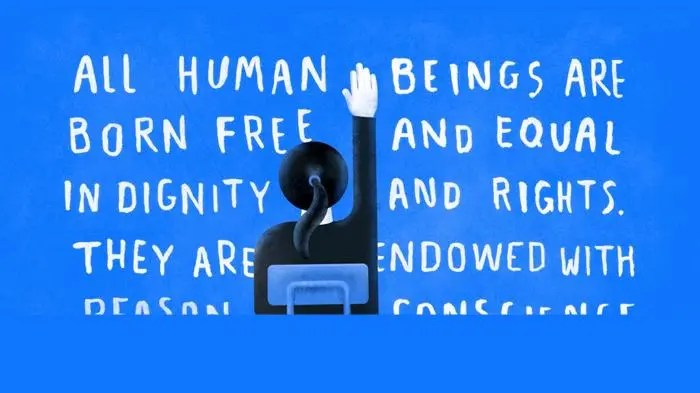
The Universal Declaration of Human Rights (UDHR), adopted by the United Nations General Assembly in 1948, starts with dignity. Article 1 declares:
“All human beings are born free and equal in dignity and rights. They are endowed with reason and conscience and should act towards one another in a spirit of brotherhood” (United Nations, 1948, Article 1).
This shows that dignity is not just a legal term—it’s a universal value meant to guide how we treat one another in society.
Dignity in the International Covenant on Civil and Political Rights (ICCPR)
The International Covenant on Civil and Political Rights (ICCPR), adopted in 1966, builds on the UDHR and gives legal force to its principles. The Preamble of the ICCPR affirms:
“Recognizing that these rights derive from the inherent dignity of the human person…” (United Nations, 1966).
This means that civil and political rights—such as the right to life, freedom of expression, and protection from torture—are not privileges granted by governments, but rights that exist because every human has dignity.
Why It Matters
Understanding human dignity helps us see why rights matter—not just in courts, but in daily life. When we respect someone’s dignity, we stand against injustice, discrimination, and abuse. And when the law reflects dignity, it protects our shared humanity.
At Habesha Law, we believe that legal knowledge should start with values. Dignity is not just the beginning of the UDHR—it should be the beginning of every conversation about justice.


 Habesha Law